The first time I stepped onto a steep lakefront lot on Lake Keowee with a client, we stood quietly for a moment and listened. Boat wakes lapped against the riprap below, ospreys circled, and late sun filtered through pines. Then came the practical questions that every good project demands. Where will the infinity edge meet the view corridor? How do we preserve that old white oak without compromising engineering? What level of automation will keep this pool looking pristine when the owners are out of town for two weeks? That balance of poetry and physics is the heart of a luxury waterfront pool.
Lake Keowee asks more of a pool than a typical suburban yard does. The water is a constant reference point, and the terrain is seldom a simple rectangle. Done right, a pool here should look inevitable, like it belongs to the shoreline. That takes planning, honest constraints, and a custom pool builder who understands how the Upstate’s geology, climate, and permitting shape the work. It also takes steady coordination from the first survey stake to the last drop of tile grout.
The Lake Keowee Setting and What It Demands
Lake Keowee’s character sets the brief. The lots often slope from road to water, sometimes gently, sometimes dramatically. Soils vary from sandy loam near coves to red clay and fractured granite up on ridges. Some owners inherit established stands of hardwoods, and many communities around the lake enforce architectural guidelines. An experienced swimming pool contractor reads these cues like a site map. The water tells you to think in tiers. The trees tell you where to frame a view. The slope tells you how to anchor structure without overbuilding.
On a lakefront, the line between living space and landscape blurs. A well-designed pool plays to that. Infinity edges, for example, are not just a look. They manage elevation change and sightline. When the spillway aligns with the center of a cove or the far ridge, it pulls the horizon into the yard. If the spill edge sits off by a few degrees, the effect weakens, and no amount of expensive tile fixes it. That is one reason early collaboration between the custom pool builder and the landscape architect pays off. Move the pool two feet, rotate it seven degrees, and you might reduce an entire retaining wall while improving the composition.
Then there is wind. Keowee’s open water channels breezes that evaporate water faster than most owners expect. Infinity pools lose more through the spillway and surface. A seasoned pool contractor will estimate evaporation based on orientation, fetch, and expected pump speeds, then size surge capacity and make-up water accordingly. It’s not glamorous, but it prevents the “why is my tanning ledge half dry on windy Tuesdays” call.
Designing With the Shoreline, Not Against It
Great lake pools feel grounded. That starts with massing. On a steep drop, tiering the design into a main pool, a spill basin, and a lower fire terrace cuts bulk and softens the fall to the shoreline. On gentler lots, a single-level plan with an integrated spa and shallow shelf may read cleaner. Either way, sightlines should govern. A lakefront yard is about borrowed scenery, not isolated focal points.
Materials speak the lake’s language too. On Keowee, I tend to favor stone and plaster tones that echo the local geology: warm grays, soft charcoals, and browns that play nice with pine and water. Imported porcelain pavers can be excellent when slip resistance and cooling factor are correct, but it pays to mock up a square in full sun. Darker decks cook bare feet in August, and pale, glossy finishes can glare off the water. On one project near Sunset, we poured two sample pads, left them in place for a week, and invited the owners to walk them at noon. They picked the cooler stone and thanked us every July after.
Water color is not simple. Many owners ask for “Caribbean blue,” then see that hue fighting the deep green of the lake. A good custom pool builder will test plaster chips on site and explain how sun angle, depth, and surrounding colors influence water tone. Often, a slightly darker interior finish reads more natural on Lake Keowee, especially when paired with a vanishing edge.
Structural Engineering on Sloped Sites
Structure wins or loses the project. A flat-yard pool relies on a straightforward soil report and consistent footings. Lake Keowee often asks for more. A geotechnical investigation becomes non-negotiable once you have slope, rock seams, or fill material near the shoreline. I have seen rock shelves that deliver rock-solid support and, two lots over, a zone of expansive clay that would crack a shell without proper mitigation. The difference is invisible until you drill.
Retaining walls are another place where costs escalate quickly if not considered early. Gravity walls can handle small drops and look good with the right stone. Segmental systems install quickly but need careful drainage design. Poured-in-place with veneer handles taller loads and gives the pool builder flexibility to tie the wall into the pool beam for a cleaner terrace. On one well-known stretch of the north shore, we replaced a proposed 10-foot wall with a three-terrace plan, each with 3 to 4 feet of rise, connected by wide steps. It trimmed engineering risk, reduced hydrostatic pressure, and created three usable zones that the owners enjoy in different seasons.
Glass tile on an infinity edge finds every flaw in structure. The edge must be laser straight within a few millimeters, and the basin beneath needs predictable hydraulics. If you chase a dead-level edge across unreliable fill or try to save money with under-reinforced shotcrete in that area, you will fight chipping tiles and inconsistent flows for the life of the pool. A serious swimming pool contractor will spec extra steel, denser shotcrete, and careful backer prep at the weir. You feel it in the construction budget, then you stop thinking about it for the next 20 years.
Hydraulics, Filtration, and Silent Reliability
Beautiful water takes good plumbing, man-sized filters, and quiet pumps. On a lake house that sits empty for stretches, automation and redundancy earn their keep. Variable-speed pumps paired with properly sized piping reduce noise and energy use, which matters when the water is 20 feet from the screened porch. The difference between 1.5-inch and 2.5-inch plumbing is pressure head, flow rate, and the day-to-day serenity of the space. It also affects the waterfall’s character. Clients rarely ask for the sound of a bathtub running. They want a low, even sheet that reads as part of the lake’s rhythm.
Salt or chlorine? On Keowee I often recommend a quality salt system for primary sanitation, then a UV secondary unit for additional disinfection. That combination keeps bather load and pollen manageable, and the water feels soft. For a vanishing-edge pool, a spill basin can collect debris. An oversized skimmer, smarter suction points, and a pre-filter basket make that manageable. When pollen season hits in March and April, the difference between an easy skim and a daily chore comes down to the hydraulic plan.
Auto-fill devices are another small detail that means a lot on a windy day. Infinity pools move water. When wind pushes the sheet harder into the basin, evaporation bumps up, and you do not want your edge breaking air. A discrete auto-fill, often fed by a dedicated domestic line with backflow prevention, keeps levels steady. Tie it into automation: a good system sends alerts if it runs longer than expected, which might indicate a leak rather than weather.
Climate, Pollen, and Four Seasons of Use
Upstate South Carolina offers true seasons. Spring brings yellow pollen, summer is hot and humid, fall turns crisp and clear, and winter flirts with freezing nights. A pool builder greenville sc veterans trust will plan for all four. In spring, skimmers work hard, and covers can be a blessing during the peak pollen dump. If the design allows, a motorized cover that seals well saves hours of cleaning. Retrofitting is harder on vanishing edges, so decide early.
Summer swimming wants shade. Cantilevered structures and pergolas are common, but trees can do more with less fuss. If you plant, choose species with manageable litter and roots that will not chase water lines. If you build shade, respect wind loads. I have recommended steel brackets over wood on high promontories where summer storms hit hard off the main channel.
Fall’s mild weather invites spa use. Gas heaters recover quickly and keep pace with cool nights. Heat pumps perform well in shoulder seasons while sipping power, but they lag on the coldest evenings. Hybrid setups, or at least gas for the spa and heat pump assist for the pool, are worth discussing. Winter’s freezing spells are short but real. If a client wants to keep the pool open year-round, automation can protect the system with freeze protection cycles. If they prefer to winterize, the plumbing layout should allow efficient blowout and isolation. That is an upstream design decision: clean manifolds and unions in accessible locations, not buried under pavers.
Permitting, Shoreline Rules, and Neighbor Realities
Lake Keowee is ringed by communities with their own architectural review boards. Duke Energy’s shoreline management guidelines apply in many areas. A pool contractor who works the lake regularly understands which jurisdictions care about tree removal, stormwater runoff, and construction near the buffer. Pushing grade toward the shoreline without a stormwater plan invites nasty erosion that eventually clouds the water and harms the fishery. On one lakeside build, we installed temporary silt fences and a staged drainage swale for six months while the terraces took shape. We lost a week to heavy rain in June, but we kept the neighbor’s cove clear, and the community noticed.
Setbacks can feel arbitrary until you see their intent. Pools that push too close to the water’s edge are harder to maintain and more vulnerable to wave action during storms. When the ARB asks for a 50-foot buffer, treat it as an opportunity to create a layered garden between pool and dock. The best projects read like they grew there.
Crafting Spaces Around the Water
The pool may be the star, but the supporting cast makes the place livable. A sun shelf with 8 to 12 inches of water invites morning coffee with toes in the pool. An integrated spa within steps of the kitchen makes spontaneous winter soaks likely. If the spa sits 50 feet down a set of stairs, it gets used less. Outdoor kitchens are popular on Keowee, but they work best when they respect wind patterns. Put a grill where prevailing breezes carry smoke away from the seating. Put the refrigerator where a wet kid can grab a drink without dripping across porcelain and hardwood.
Fire features need clearances and airflow. Gas supply sizing matters. Between pool heaters, outdoor kitchens, and fire pits, a typical 3/4-inch gas line from the street will not cut it. A competent custom pool builder coordinates with MEP trades early so that the trench you cut for the pool equipment also carries electric, gas, and data conduits. That is a small drawing note with big consequences for schedule and lawns.
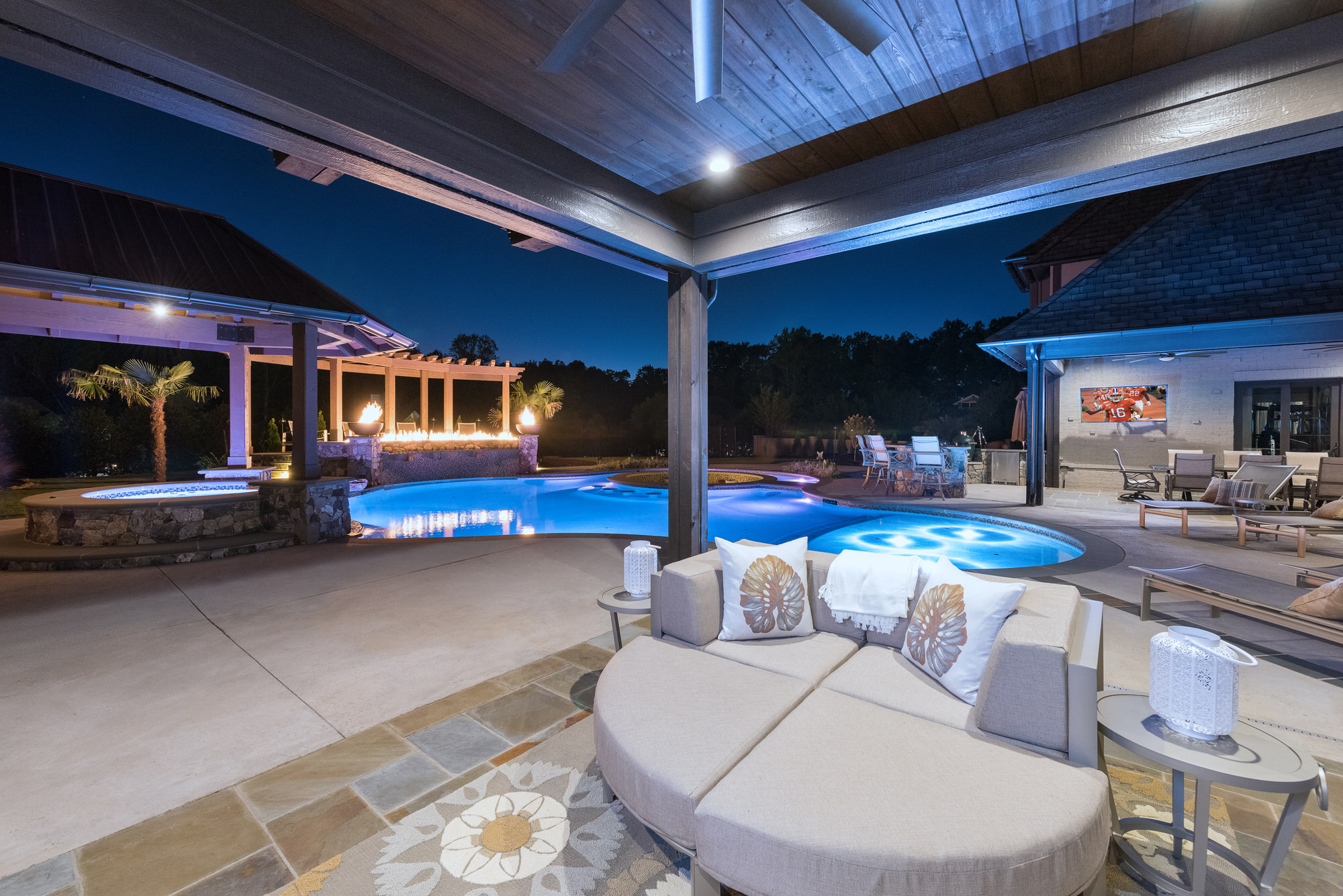
Lighting makes or breaks night use. Subtle layers win. Avoid the stadium effect. Use wall-wash fixtures custom pool builder to graze stone. Place small, shielded lights under steps. Keep fixtures out of direct view to preserve the dark lake sky. Color-changing RGBW lights tempt owners, yet most settle into a warm white. The occasional game-day blue is a bonus, not the base layer. For docks visible from the house, coordinate color temperature so the scene feels cohesive.
Technology That Helps Without Taking Over
Automation can simplify remote ownership. A thoughtful system lets you monitor water level, temperature, sanitation, and pump schedules from your phone. It alerts you to flow irregularities and chlorinator output changes. When tied into smart home platforms, it can cue path lights and heat the spa by the time you arrive on Friday night. The key is restraint. Hide the complexity until you need it. Wall panels should be clean and labeled, not spaghetti diagrams only a tech can love.
Robotic cleaners earn their cost around Lake Keowee. Pine needles, flakes of pollen, and occasional grass clippings find their way in no matter how careful you are. A good robot cleans the shelf, runs the walls, and keeps the waterline tidy. It is not a substitute for a maintenance plan, just a smart tool.
Budgeting With Foresight
No two lake pools cost the same. Site conditions, access, and finish choices move the needle. For a high-quality, gunite waterfront pool with an infinity edge, integrated spa, and premium finishes, expect a range that starts in the low six figures and often climbs past 300,000 dollars when you factor in retaining walls, terraces, and a proper outdoor kitchen. Complex sites can double that once you add heavy engineering and specialty stone. When a bid looks too good to be true, it usually hides exclusions that reappear as change orders. A reputable swimming pool contractor makes the allowances clear: for rock excavation, for access constraints, for winter work.
Owners sometimes try to save by value-engineering the surge basin on an infinity pool or downsizing equipment. It is wiser to simplify finishes than to compromise operations. A well-built plaster interior beats a top-shelf glass mosaic over a poorly functioning edge every day. If budget pressure hits, consider scaling back the length of the vanishing edge, reducing the square footage of the tanning ledge, or phasing the outdoor kitchen. Protect structure and hydraulics.
Construction Logistics on Tight Lakefront Lots
Access drives schedule. If the only path to the back is a narrow side yard between a chimney and a property line, the pool builder might need to bring in smaller machinery, which raises labor hours. If the route crosses a septic drain field, you will need a workaround. On several Keowee projects, we negotiated temporary easements with neighbors for equipment access. A bottle of good bourbon and a clear insurance certificate go a long way. Protecting existing trees matters too. Root zones on oaks and maples do not tolerate heavy equipment parked for days. A certified arborist can help map critical root areas, and a boardwalk of matting can distribute loads.
Concrete washout areas should be established from day one. You do not want a cement truck rinsing chutes near the shoreline. The builder should stage spoils and manage haul-off runs so that mud does not track onto lake roads. Neighbors have long memories, and communities talk.
Working With the Right Team
Lake projects succeed when the team knows the terrain, literally and figuratively. The best custom pool builders schedule early meetings with the architect, landscape designer, and general contractor. They bring samples, plan tolerances in inches not wishes in feet, and show past work of similar complexity. If your property sits closer to Greenville or Spartanburg, you will find strong regional firms with experience in the Upstate market. A pool builder greenville sc residents recommend might also work regularly on Keowee. On the east side, a pool builder spartanburg sc teams know could be competitive for projects where their crews already operate. Closer to the lake itself, a pool builder lake keowee sc specialist understands the quirks of shoreline rules and community boards. If your mountain home leans north toward Brevard or Henderson County, a pool builder asheville nc familiar with elevation and freeze considerations brings valuable insight. The label matters less than their portfolio on waterfront slopes and their willingness to put subs and suppliers in writing.
Licensing, insurance, and references are table stakes. Ask to see an active site, not just a finished one. Look at rebar chairs, beam thickness, plumbing manifolds, and edge straightness before gunite. You will learn more in 15 minutes on a build than in an hour with a brochure.
Real-world Scenarios and Lessons Learned
On a glassy point lot, an owner asked for an all-tile pool and an extra-long vanishing edge spilling toward open water. The site had shallow bedrock, which was good news. The challenge came from wind. Afternoon gusts pushed water sheets hard enough that the basin would have sprayed guests on the lower terrace. We ran a week of on-site tests with a temporary weir to map splash patterns. The answer was a slightly thicker lip profile, a micro-texture on the edge tile, and an adjustable flow program in the pump schedule that eased the sheet during wind events. You do not predict that from a desk. You solve it on the site.
Another project sat above a narrow cove with steep neighbors. Access was a single-lane road with tight turns. We swapped a 75-foot crane plan for a series of smaller lifts and assembled the spa shell rebar on-site rather than setting prefab cages. It cost a few extra days and saved a chunk of budget. More important, it kept the HOA calm by limiting road closures to early mornings with flaggers.
We also learned to respect the power of small elevations. On a build with a 24-inch drop from the main pool to the spa, the original plan put the spa on the lake side. It looked handsome, but it stole the best view from swimmers. A quick role-play on site changed the arrangement. We shifted the spa inland by 10 feet, used a low stone seat wall as a visual anchor, and gave the swimmer’s eye line back to the lake. Same materials, same cost, better daily joy.
Sustainability Without the Slogans
Water and energy matter, especially around a reservoir. Properly sized filters trap more particulate and run at lower speeds. LED lighting uses a fraction of old incandescent fixtures. Heat pump assists and solar pre-heat coils can shave costs in shoulder seasons. Native plantings around terraces stabilize soil and reduce irrigation demand. A pool installation that embraces these choices operates quietly and gracefully. This is not about buzzwords. It is about a system that works with its place.
Backwash discharge needs a home that is not the shoreline. If the builder cannot explain where filtration waste goes, slow the process and get a plan. Similarly, chemical storage should be in ventilated, shaded enclosures away from mechanical heat. Safe, boring details prevent big headaches.
How to Prepare as a Homeowner
- Walk the site at three times of day, then rank your priorities: view from the kitchen, spa convenience, lap length, tanning shelf, or fire terrace. Hard choices get easier with clear priorities. Ask the pool builder to show surge capacity, pump schedules, and sanitation plans in writing for an infinity edge concept. Operations matter as much as looks. Request a geotechnical report early and budget for it. Spend money where dirt becomes structure. Visit a builder’s active job to inspect craftsmanship before finishes hide the bones. Look for tidy steel, clean plumbing, and organized equipment pads. Set a realistic schedule with weather allowances. Lake projects may pause for rain and inspections. Patience here preserves quality.
Where Craft Meets Water
Luxury on Lake Keowee is not a catalog of features. It is the feeling that your pool belongs to the shoreline and your life. On good projects, the vanishing edge becomes a quiet line that invites your eye, not a loud centerpiece. The deck materials feel right underfoot at noon. The spa sits where you will actually use it, not where a rendering looked dramatic. The equipment hums softly. The water stays clear when pollen flies and when the family comes to town. That outcome starts with design that respects the site and a custom pool builder who can translate drawings into structure, plumbing into performance, and materials into calm.
You will hear terms like negative edge, beach entry, Bento tile, ozone, and manifold. They all have their place. The deeper success lies in a thousand small decisions made with judgment and a few big ones made early with courage. Move the pool for the tree you love. Invest in the edge you will see every day. Accept that some stone comes with natural variation and that the lake will throw you a windy afternoon just when you planned a crisp photo. Then swim, watch the light change on the water, and feel the work disappear.